Hay Harvesting Timeline: Understanding the Process From Field to Bale
Successful hay harvesting depends on timing, preparation, and experience. From monitoring crop maturity to choosing the right weather conditions for baling, every step of the process affects the final quality of the hay.
For farmers who manage their own fields or are considering custom hay services, understanding the hay harvesting timeline can help improve production, protect hay quality, and ensure the crop is ready when it matters most.
The process involves several important stages:
- Preparing the hay field
- Cutting the crop
- Raking and drying
- Baling the hay
- Storing and handling the finished bales
Each step plays a role in producing consistent, high-quality forage.
What Is the Hay Harvesting Process?
Hay harvesting is the process of turning a standing hay crop into a finished product ready for storage and feeding.
The general process includes:
- Monitoring crop growth
- Cutting the hay
- Allowing the crop to dry
- Raking the windrows
- Baling the hay
- Transporting and storing the bales
The exact timeline depends on factors such as:
- Weather conditions
- Hay variety
- Field conditions
- Equipment availability
- Desired hay quality
Successful hay production requires careful planning from start to finish.
Stage 1: Monitoring the Hay Crop
Before any equipment enters the field, producers monitor the condition of the hay crop.
The goal is to harvest when the plants have reached the right balance between:
- Nutritional value
- Plant maturity
- Yield
- Drying conditions
Harvesting too early may reduce yield, while waiting too long can decrease nutritional quality.
Experienced producers evaluate the field regularly to determine the ideal cutting window.
Stage 2: Hay Cutting
The first major step in the process is hay cutting.
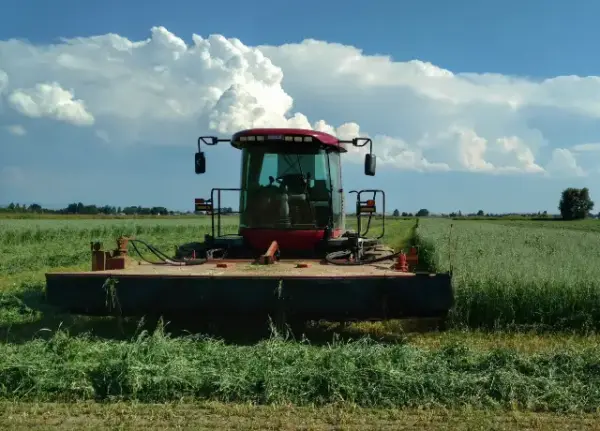
During this stage, specialized equipment cuts the standing forage and lays it into rows called windrows.
Proper cutting timing is important because it impacts:
- Hay quality
- Nutrient levels
- Drying time
- Overall yield
Weather plays a major role during this stage. Producers typically look for a period of dry weather to allow the cut hay to cure properly before the next steps.
Stage 3: Drying and Curing the Hay
After the crop is cut, it needs time to dry before it can be baled.
This stage is sometimes called curing.
The goal is to reduce moisture levels while protecting the nutritional value of the forage.
Factors affecting drying include:
- Sun exposure
- Wind conditions
- Temperature
- Crop thickness
- Weather changes
Proper curing helps reduce problems such as:
- Mold
- Spoilage
- Storage losses
Moisture management is one of the most important parts of producing quality hay.
Stage 4: Hay Raking
Once the hay has dried sufficiently, producers complete hay raking.
Raking combines the cut forage into organized rows, making it easier for balers to collect the material.
Proper raking helps:
- Improve baling efficiency
- Create consistent windrows
- Reduce field losses
- Prepare the crop for the next step
Timing matters. Raking too early can disturb wet hay, while waiting too long can expose the crop to unnecessary weather risks.
Stage 5: Hay Baling
The final major harvesting step is hay baling.
During this stage, balers collect the dried forage and compress it into manageable bales.
The timing of baling affects:
- Bale quality
- Storage success
- Feed value
- Long-term durability
Properly baled hay should have appropriate moisture levels and maintain its structure during handling.
Different operations may produce different bale sizes depending on customer needs and equipment.
How Weather Impacts Hay Harvesting
Weather is one of the biggest factors affecting the hay season.
A successful harvest requires careful coordination because producers need:
- Enough dry days for cutting
- Proper drying conditions
- Safe baling weather
- Suitable storage conditions
Unexpected rain can impact:
- Hay color
- Nutritional value
- Storage quality
- Overall production
Because timing is so important, many farmers rely on experienced hay harvesting services to help complete the job efficiently.
The Role of Equipment in Hay Production
Modern hay equipment allows producers to complete harvesting efficiently while maintaining quality.
Common equipment involved includes:
- Mowers for cutting
- Rakes for gathering forage
- Balers for creating bales
- Handling equipment for moving finished products
Maintaining reliable equipment is essential because the ideal harvest window can be short.
When conditions are right, producers need equipment and experience ready to complete the process.
Why Farmers Choose Custom Hay Harvesting
Not every farm owns the equipment or labor required to complete a full harvest.
That is where custom hay harvesting can provide value.
Benefits of hiring a custom hay provider include:
- Reduced equipment investment
- Access to experienced operators
- Faster harvest completion
- Less maintenance responsibility
- Improved scheduling flexibility
For farmers who need help with cutting, raking, and baling, custom hay services provide an efficient solution.
What Are Custom Hay Services?
Custom hay services allow farmers to hire experienced professionals to complete specific harvesting tasks.
Services may include:
- Hay cutting
- Hay raking
- Hay baling
- Field preparation
- Bale handling
This allows landowners to focus on other farm responsibilities while ensuring their crop is harvested properly.
Hay Harvesting Timeline Summary
A typical hay harvesting timeline looks like this:
1. Crop Monitoring
Evaluate maturity and field conditions.
2. Hay Cutting
Cut the crop when quality and yield are balanced.
3. Drying
Allow forage to cure properly.
4. Hay Raking
Organize dried forage into windrows.
5. Hay Baling
Compress forage into finished bales.
6. Storage
Protect bales to maintain quality.
Frequently Asked Questions
How long does hay harvesting take?
The timeline depends on weather, field size, crop conditions, and available equipment. Some fields can be completed quickly when conditions are ideal.
When is the best time to cut hay?
The best cutting time depends on crop maturity, weather conditions, and the desired balance between quality and yield.
What equipment is used for hay harvesting?
Common hay equipment includes mowers, rakes, balers, and bale-handling equipment.
What are custom hay harvesting services?
Custom hay harvesting services allow farmers to hire experienced operators to cut, rake, and bale their hay without owning all the required equipment.
Why is timing important when harvesting hay?
Proper timing helps preserve nutritional value, improve bale quality, and reduce storage problems.
Conclusion
A successful hay harvesting process requires careful timing, reliable equipment, and experience. From the first cut in the field to the final bale being stored, every step influences the quality of the finished product.
Understanding the hay harvesting timeline helps farmers make better decisions about their fields and determine when professional help may be beneficial.
For farmers looking for reliable custom hay services, H3 Farms provides experienced hay harvesting solutions, including cutting, raking, and baling. Whether you need assistance during a busy hay season or complete custom hay harvesting, Contact our team today and find a partner that can help protect your crop and improve efficiency.